
English 
Garden water features are becoming a favorite element in modern outdoor design because moving water adds energy, sound, and visual balance to ponds, patios, and backyard landscapes. When planning a fountain, however, many homeowners hesitate between installing a Solar Fountain or choosing a traditional electric fountain, since both options offer different advantages in installation, cost, and performance.
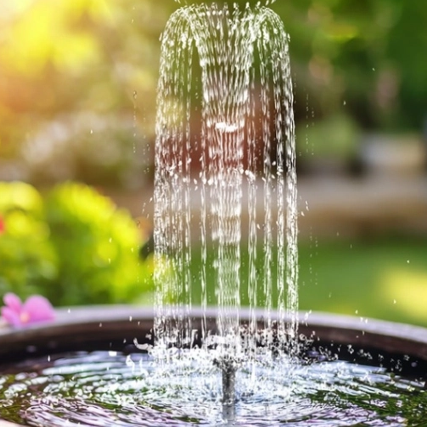
Understanding how these two fountain systems differ can help you avoid common mistakes when designing a garden water feature. In this article, we compare solar and electric fountains from several perspectives, including power source, operating cost, reliability, and maintenance, so you can clearly determine which fountain type best fits your garden pond and outdoor environment.
Understanding the fundamental differences between solar and electric fountains is essential before selecting a system for your garden or pond. These fountains differ not only in their energy source but also in installation requirements, operating costs, performance stability, and ideal usage scenarios.
Feature | Solar Fountain | Electric Fountain |
Power Source | Solar energy from sunlight | Grid electricity |
Installation | Simple, minimal wiring | Requires electrical outlet |
Operating Cost | No electricity cost | Continuous electricity use |
Performance | Depends on sunlight conditions | Stable and consistent |
Best Use | Small ponds, eco-friendly gardens | Large fountains and strong displays |
The primary difference between the two fountain systems lies in their power source. A Solar Fountain uses solar panels to capture sunlight and convert it into electrical energy, which powers a small water pump responsible for circulating water through the fountain display. Because solar fountains operate using renewable solar energy, they do not draw electricity from the power grid, which means they generate no ongoing electricity costs and contribute to environmentally sustainable garden design.
Electric fountains operate differently because they rely on a continuous connection to the household electrical system. These fountains use submersible pumps connected to outdoor outlets or underground wiring, ensuring a constant power supply that allows the fountain to run at full capacity regardless of sunlight or weather conditions. However, this continuous power consumption increases electricity usage over time.
Solar fountains eliminate electricity bills but require reliable sunlight exposure for optimal performance.
Installation complexity is another significant difference between solar and electric fountains. Solar fountains are typically easier to install because they require minimal infrastructure. Most systems simply involve placing a pump inside the water and positioning the solar panel in a sunny location where it can capture sufficient sunlight to power the fountain.
Electric fountains, by contrast, often require more complex installation procedures because they must connect to a power outlet or electrical supply. If the fountain is located far from the house or an existing electrical outlet, homeowners may need to install underground wiring or hire an electrician to safely connect the system.
Solar fountains are ideal for garden areas where electrical outlets are unavailable or difficult to install.
When comparing costs, both fountain types have different financial advantages depending on how long the system will operate. Electric fountains often have lower initial purchase costs for smaller pumps, making them attractive for homeowners with limited budgets. However, because electric fountains consume electricity every time they run, their operating costs accumulate over time.
Solar fountains may have slightly higher upfront costs due to solar panels and battery components, but they operate using free sunlight. As a result, solar fountains typically have lower long-term operating costs because they do not increase monthly electricity bills.
Electric fountains generally provide stronger water pressure and higher spray heights because they receive constant electrical power from the grid. This makes them suitable for large decorative water features, commercial fountains, or landscape installations requiring dramatic water displays.
Solar fountains have improved significantly as solar technology has advanced, and many modern models are capable of producing attractive spray patterns and moderate spray heights. However, because they rely on sunlight, their performance may fluctuate depending on solar intensity throughout the day.
Electric fountains maintain consistent performance in all weather conditions because they are powered by electricity rather than sunlight. Rain, clouds, or nighttime conditions do not affect their operation, which makes them highly reliable for large ponds or commercial water displays.
Solar fountains are more dependent on environmental conditions. On cloudy days or in shaded gardens, water spray height and pump performance may decrease unless the fountain includes a battery backup system capable of storing excess solar energy during sunny periods.
Battery backup systems help solar fountains maintain more consistent operation during cloudy conditions.
Both fountain systems require routine maintenance to maintain efficient operation. Pumps must be cleaned regularly to remove debris, filters should be inspected periodically, and water levels should be monitored to prevent pumps from running dry.
Solar fountains also require occasional cleaning of the solar panel surface to remove dust, pollen, or leaves that may block sunlight. Electric fountains require inspection of electrical connections and wiring to ensure safe operation in outdoor environments.
Solar fountains are most suitable for small to medium garden ponds, decorative birdbaths, and eco-friendly landscapes where sunlight is abundant and minimal installation complexity is desired. Electric fountains are better suited for large ponds, public landscapes, or installations requiring strong water pressure and continuous operation.
A Solar Fountain offers several important benefits that appeal to homeowners interested in sustainable landscaping solutions. Because solar fountains rely entirely on renewable energy from the sun, they produce no ongoing electricity costs and reduce the environmental impact of outdoor water features. This makes them an excellent choice for eco-friendly gardens and homeowners who wish to reduce energy consumption.
Solar fountains are also flexible in terms of placement because they do not require electrical outlets or complex wiring. This allows them to be installed in remote garden areas, patios, small ponds, birdbaths, or even floating decorative bowls where electric fountains would be difficult to install.
Despite their advantages, solar fountains do have certain limitations. Their performance depends heavily on sunlight availability, which means the fountain may operate at reduced power during cloudy weather or in shaded areas surrounded by trees or buildings. Additionally, smaller solar fountains may not produce the high water pressure required for large decorative displays.
Solar fountains perform best in sunny locations where solar panels receive several hours of direct sunlight each day. They are particularly effective for small decorative ponds, birdbaths, and residential garden features where gentle water movement and visual aesthetics are the primary goals.
Modern solar fountains often include several features designed to improve performance and versatility.
Common features include:
● High-efficiency photovoltaic solar panels
● Rechargeable battery backup systems
● Multiple interchangeable spray nozzles
● Adjustable solar panel mounts for optimal sunlight
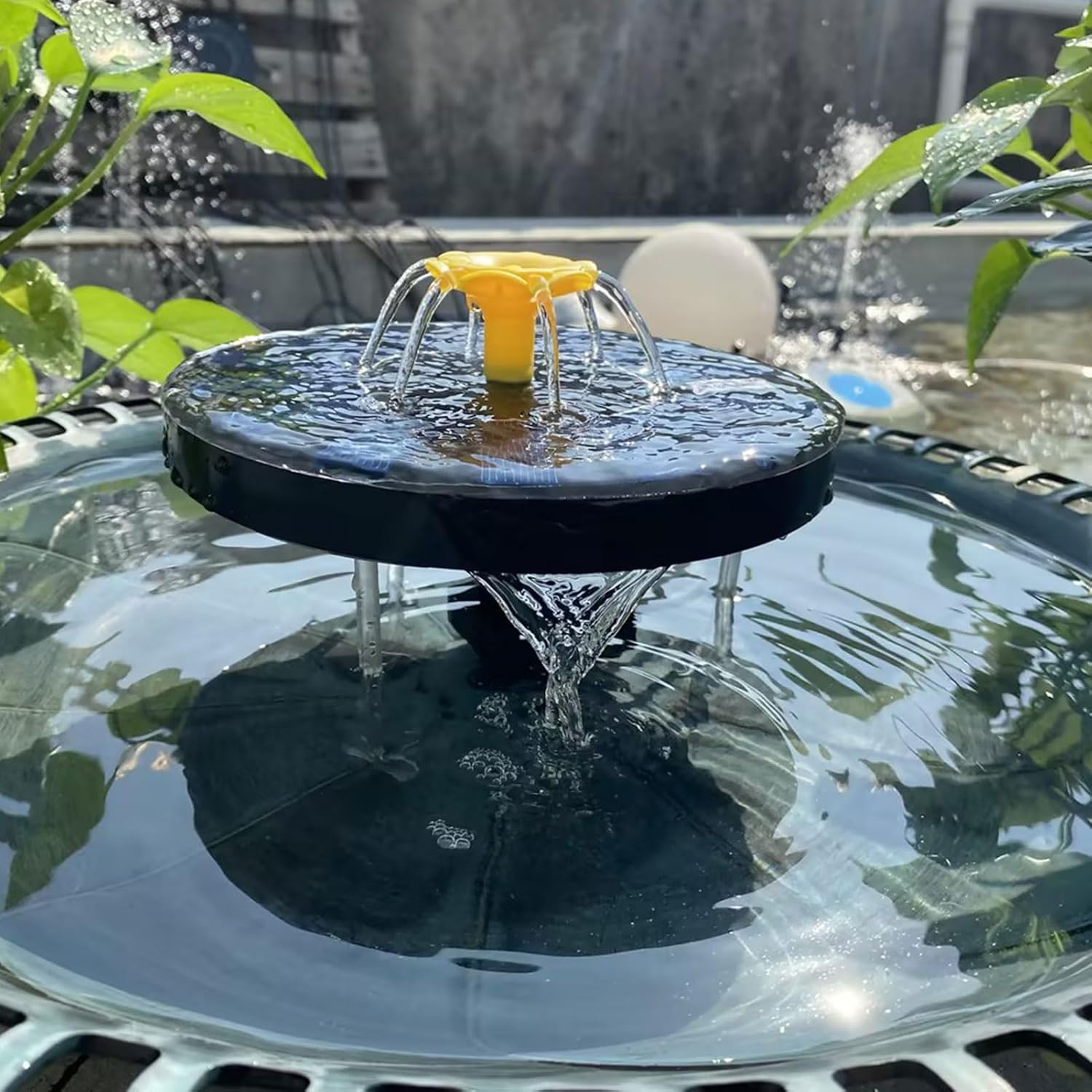
Electric fountains offer strong and consistent water pressure because they operate using a continuous power supply from the electrical grid. This allows them to support large fountains with high spray heights and complex cascading water displays that are difficult to achieve with solar-powered systems.
The primary disadvantage of electric fountains is their reliance on electrical wiring and outlets, which can complicate installation and increase setup costs. They also consume electricity continuously while operating, which can increase long-term energy expenses.
Electric fountains are ideal for large ponds, commercial landscapes, hotels, resorts, or municipal parks where high water pressure and continuous operation are necessary to maintain impressive fountain displays.
Electric fountain systems often include advanced features designed to enhance performance and control.
These features may include:
● High-capacity submersible pumps
● Adjustable flow control systems
● Programmable timers
● Integrated LED lighting
Understanding cost differences is essential when choosing a fountain system because the total cost of ownership includes purchase price, installation, and ongoing operating expenses.
Cost Category | Solar Fountain | Electric Fountain |
Purchase Cost | Medium | Low to high |
Installation Cost | Low | Moderate to high |
Energy Cost | Free sunlight | Monthly electricity |
Maintenance | Low | Moderate |
Solar fountains often require a slightly higher initial investment but eliminate electricity costs over time, while electric fountains may be cheaper initially but accumulate higher operating expenses.
Electric fountains typically produce stronger water jets and higher spray heights because they receive continuous electrical power, which allows them to support large decorative displays.
Solar fountains perform best during bright sunlight conditions and may experience reduced output during cloudy periods, while electric fountains maintain stable performance regardless of weather conditions.
Both solar and electric fountain pumps can last several years if maintained properly. Solar fountains may require occasional battery replacement, while electric pumps may experience greater wear due to continuous operation.
Solar fountains generally operate quietly because they use smaller pumps, whereas electric fountains may produce slightly more motor noise due to higher pump power.
Solar fountains are significantly easier to install because they require minimal setup and no electrical wiring. Homeowners simply place the pump in the water and position the solar panel in a location that receives direct sunlight.
Electric fountains require more preparation because they must connect to an electrical outlet or underground wiring system. In some cases, professional installation may be necessary to ensure electrical safety.
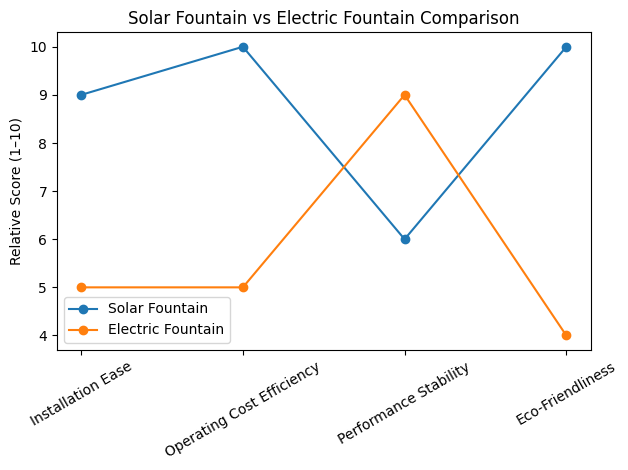
● Renewable Energy Benefits of Solar Fountains
A Solar Fountain uses renewable solar energy and produces no greenhouse gas emissions during operation, making it a sustainable choice for environmentally conscious homeowners.
● Electricity Consumption of Electric Fountain Pumps
Electric fountains rely on grid electricity, which contributes to overall energy consumption and environmental impact depending on the energy source used by the local power grid.
● Sustainability Comparison
Solar fountains support sustainable landscape design and help reduce energy consumption in residential gardens.
● Eco-Friendly Garden Design
Many modern landscape designs incorporate solar fountains as part of eco-friendly outdoor spaces that emphasize renewable energy and environmental responsibility.
Choosing between solar and electric fountains ultimately depends on several factors such as garden location, available sunlight, budget, desired fountain performance, and environmental priorities. If your garden receives abundant sunlight throughout the day, a solar fountain can be an ideal choice because it operates using renewable energy and reduces long-term electricity costs. However, if you want a fountain with higher spray height or stronger water pressure for a large decorative display, an electric pump may be more suitable because it provides consistent power. Budget considerations also play an important role, as solar fountains often lower long-term energy expenses while electric fountains require ongoing electricity use. In addition, the size of your pond should influence your decision, since small decorative ponds typically work well with solar fountains, whereas larger ponds may benefit from electric fountains that provide stronger water circulation.
Both fountain systems offer unique advantages depending on the needs of your outdoor space. A Solar Fountain is an eco-friendly and cost-effective choice for small to medium garden ponds because it runs on renewable energy and requires simple installation, while electric fountains provide stronger and more consistent water pressure for larger water features that need stable performance. Products from Shenzhen BSV Solar Energy Co., Ltd. offer practical solar fountain options for decorative ponds and gardens. By considering factors such as sunlight exposure, installation conditions, spray height, and long-term operating costs, homeowners can choose the fountain system that best fits their garden landscape.
A: A Solar Fountain uses sunlight to power a pump that circulates water without electricity.
A: A Solar Fountain has no electricity cost, while electric fountains increase power bills.
A: A Solar Fountain uses solar panels to convert sunlight into energy for the pump.
A: Electric fountains provide stronger pressure, while a Solar Fountain suits smaller ponds.
A: A Solar Fountain may spray lower if sunlight is weak or the panel is shaded.