
English 
Views: 0 Author: Site Editor Publish Time: 2026-09-01 Origin: Site


Standard direct-drive solar aeration systems stop working when the sun goes down. This creates a massive problem for aquatic environments because oxygen depletion in ponds peaks just before dawn. This happens exactly when direct-drive systems have been offline for over ten hours. Fish ponds and lakes operate on a strict biological reality. Aquatic plants and algae produce oxygen during the day. At night, they consume it. This respiration cycle creates a severe oxygen deficit. Without continuous aeration, this deficit leads to fish kills, rapid muck accumulation, and foul odors. A solar pond aerator with battery backup solves this exact problem. It serves as the definitive off-grid solution. This technology bridges the gap between renewable energy constraints and biological necessity. It ensures continuous oxygenation using clean, sustainable power.
Nighttime Mitigation: A battery backup solar aerator prevents the dangerous early-morning oxygen crashes common in high-density fish ponds.
System Sizing is Critical: Success depends on matching solar panel wattage and battery capacity (Ah) to the compressor's continuous draw, ensuring sufficient runtime during cloudy days.
Chemistry Matters: Lithium-ion (LiFePO4) batteries offer longer lifespans and deeper discharge capabilities compared to traditional Sealed Lead Acid (SLA) setups, heavily influencing long-term system value.
Application Versatility: Solutions scale from micro-systems for backyard hydroponics to commercial-grade setups for remote agricultural ponds where trenching grid power is cost-prohibitive.
Successful aeration requires maintaining dissolved oxygen (DO) levels above 5 parts per million (ppm) at all times. Aquatic life depends on this stable baseline to digest food, resist disease, and grow. Intermittent aeration fails this core requirement completely. Direct-drive solar panels only operate during peak sunlight hours. They ramp up slowly in the morning, peak at noon, and shut down completely by late afternoon. This leaves the water body stagnant for the majority of a 24-hour cycle, especially during short winter days. Relying solely on the sun creates dangerous fluctuations in water quality. A constant, stable oxygen supply prevents thermal stratification. It keeps the entire water column mixed, balanced, and healthy from the surface down to the benthic zone.
Pond ecosystems follow a strict respiration cycle. During daylight, photosynthesis produces abundant oxygen. The water often reaches supersaturation. Once the sun sets, this biological process reverses entirely. Plants, algae, and beneficial bacteria begin consuming oxygen. They compete directly with the fish for limited resources. This nighttime respiration drains the dissolved oxygen rapidly. The lowest oxygen levels occur right before sunrise. You must use a reliable solar aerator for fish pond management to survive this dark period. Pushing air through the water at night strips away toxic gases like carbon dioxide and hydrogen sulfide. It replaces them with life-saving oxygen. Without nighttime operation, high-density ponds face catastrophic fish loss before the morning sun even hits the water.
Real-world weather rarely matches optimal testing conditions. Cloudy days, rainstorms, and seasonal low-light periods drastically reduce solar output. Battery systems provide necessary autonomy days. This buffer capacity keeps the compressor running when solar generation drops. A system rated for 20 hours of runtime in optimal conditions might only achieve 10 hours during heavy overcast weather. The battery bank bridges these gaps effortlessly. It captures excess energy during bright periods. It releases that energy steadily when clouds roll in. This redundancy separates professional aeration setups from novelty garden gadgets.
Weather Condition | Direct-Drive Performance | Battery Backup Performance |
|---|---|---|
Clear Summer Day | 8-10 hours of aeration | 24 hours of continuous aeration |
Heavy Overcast | Intermittent sputtering or zero output | Runs normally on stored battery reserves |
Nighttime | Zero aeration | Full compressor output until dawn |
Short Winter Days | 4-6 hours of weak aeration | Adjusted runtime based on battery capacity |
Running electrical lines to a remote pond requires heavy machinery and extensive labor. Trenching demands significant capital per foot of wire buried. You have to navigate around tree roots, existing utility lines, and rocky soil. Furthermore, long wire runs suffer from voltage drop, requiring expensive heavy-gauge copper wire to deliver adequate power to the water's edge. A solar pond aerator eliminates this barrier entirely. You place the system exactly where you need it. There are no monthly electrical bills to pay. The initial hardware investment replaces decades of utility costs. This off-grid reliability gives property owners complete control over their water management infrastructure without relying on local power companies or dealing with complex permitting for new electrical drops.
Properly sized battery banks transform solar energy into round-the-clock power. During peak sun hours, the solar array performs two simultaneous jobs. It runs the air compressor directly. It also pushes maximum current into the battery bank through a charge controller. This stored energy extends the runtime to 20 or even 24 hours per day. The performance matches traditional grid-tied systems perfectly. You get continuous bottom-up aeration. Continuous flow prevents the thermal stratification that leads to severe algae blooms and heavy muck accumulation on the pond floor. The constant bubbling action breaks the surface tension, allowing harmful gases to escape while drawing atmospheric oxygen into the water.
Summer grid blackouts pose a severe threat to aquatic life. These power failures often coincide with intense heatwaves. Warm water holds significantly less dissolved oxygen than cold water. Fish metabolism also increases in warm water, driving up their oxygen demand dramatically. A grid-tied aerator failing during a summer heatwave is a recipe for disaster. A battery-backed solar system remains completely unaffected by local power grid failures. It provides continuous protection during the exact moments your pond needs it most. You never have to worry about resetting breakers or running extension cords from a gas generator during a severe storm.
Transitioning to solar power reduces the carbon footprint of property management. Water aeration traditionally consumes significant electrical power. Compressors run constantly, drawing heavy loads from fossil-fuel-heavy utility grids. Utilizing clean, renewable energy changes this dynamic entirely. It aligns property maintenance with modern sustainability goals. Facility managers and homeowners can maintain pristine water quality without contributing to environmental degradation. It represents a clean break from legacy power generation. You harness the natural energy hitting your property to solve a natural biological problem in your water feature.
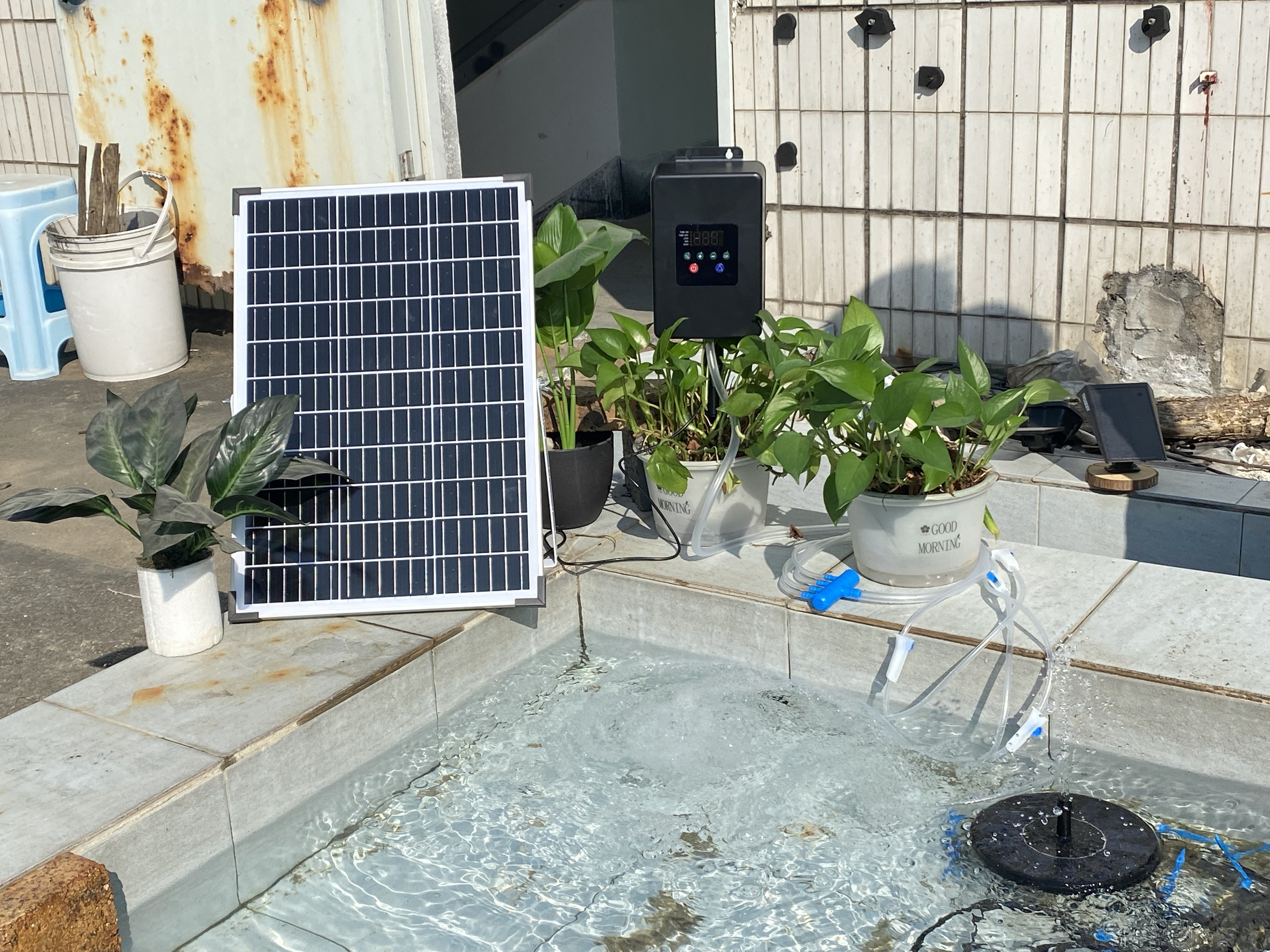
Commercial fish farming demands absolute precision. High stocking densities push the biological limits of the water. Oxygen requirements are strict and unforgiving. When you pack hundreds of pounds of fish into a small body of water, the natural oxygen exchange rate cannot keep up. Trophy bass ponds face similar environmental pressures. Large predatory fish require highly oxygenated water to digest food and grow rapidly. A battery-supported solar system ensures these valuable fish never experience hypoxic stress. It maintains the aggressive feeding behavior necessary for rapid growth rates and overall herd health. It also prevents sudden ammonia spikes that occur when beneficial bacteria die off from lack of oxygen.
Livestock depend heavily on clean drinking water. Stagnant agricultural ponds breed disease quickly. They harbor harmful cyanobacteria that can be highly toxic to cattle and horses. Animals will actively avoid drinking foul-smelling, stagnant water, leading to dehydration and poor weight gain. Aeration keeps the water moving constantly. It disrupts the lifecycle of mosquitoes and prevents thick algae mats from forming. Remote pastures rarely have access to grid power. A reliable solar setup improves water quality dramatically. Better water quality leads to higher livestock consumption and better overall herd hydration.
Facility managers deal with isolated water bodies across sprawling properties. Golf course ponds often suffer from nutrient runoff due to heavy fertilizer use on the surrounding greens. This runoff causes explosive algae growth, duckweed infestations, and foul odors that generate complaints from patrons. Trenching power across manicured fairways is highly disruptive and expensive. Solar aeration provides a stealthy, effective solution. It controls odors by maintaining aerobic conditions at the pond bottom, allowing beneficial bacteria to consume the excess nutrients. It keeps the water features aesthetically pleasing without tearing up the pristine turf.
The technology scales down effectively for residential use. Micro-scale solar aerators manage backyard koi ponds and birdbaths effortlessly. These smaller units often utilize 6V panels paired with compact lithium batteries. They provide gentle, consistent bubbling. This oxygenation supports small-scale hydroponic systems as well. Plant roots require oxygen to absorb nutrients efficiently. A compact battery backup solar aerator keeps nutrient solutions fresh and prevents root rot in off-grid garden setups. It allows hobbyists to build thriving aquatic ecosystems anywhere on their property without running extension cords across the lawn.
Battery chemistry dictates system longevity and reliability. Lithium Iron Phosphate (LiFePO4) and Sealed Lead Acid (SLA) are the two primary options available when selecting a solar aerator with battery. SLA batteries require less initial investment. However, they suffer permanent damage if discharged below 50% capacity. This phenomenon, known as sulfation, coats the lead plates and destroys the battery's ability to hold a charge. Lithium batteries handle deep discharges up to 90% without sustaining damage. They also offer a 5 to 10-year lifespan, compared to the 2 to 3 years typical of SLA units. Lithium batteries include a built-in Battery Management System (BMS) that protects the cells from overcharging and extreme depletion.
Feature | Lithium (LiFePO4) | Sealed Lead Acid (SLA) |
|---|---|---|
Depth of Discharge (DoD) | 80% - 90% | 30% - 50% |
Lifespan (Cycles) | 2000 - 5000 cycles | 300 - 500 cycles |
Weight Profile | Lightweight and compact | Very heavy and bulky |
Cold Weather Charging | Requires internal heating below 32°F | Accepts charge in freezing temperatures |
Maintenance Required | Zero maintenance | Periodic terminal cleaning required |
The air compressor acts as the heart of the system. Its DC voltage rating determines the required battery bank voltage. Output is measured in Cubic Feet per Minute (CFM) or Liters per Minute (LPM). Higher CFM means more air volume pushed into the pond. However, higher CFM compressors draw significantly more amps. You must balance the desired air output against the battery drain. A high-output compressor will drain an undersized battery bank in just a few hours. Rocking piston compressors are ideal for deep ponds because they generate high pressure. Linear diaphragm compressors work best for shallow ponds because they produce high volume at low pressure while consuming very little electricity.
Panel wattage must exceed the compressor's draw by a significant margin. The calculation framework is straightforward. The panel output must simultaneously run the compressor and recharge the depleted battery bank. This must happen during limited peak sun hours. If a compressor draws 50 watts continuously, a 50-watt panel will fail. You need a 150-watt or 200-watt panel to generate enough surplus energy to fill the battery before sunset. You also need a high-quality Maximum Power Point Tracking (MPPT) charge controller. MPPT controllers convert excess solar voltage into usable charging current, extracting up to 30% more power from the panels compared to basic Pulse Width Modulation (PWM) controllers.
Water is heavy. Every 2.3 feet of water depth adds 1 PSI of backpressure to the airline. Deeper ponds require higher PSI compressors to push air down to the bottom diffusers. High-pressure compressors work harder and draw more electrical current. This increased amp draw requires larger battery capacities and more solar wattage. You must measure your pond's maximum depth accurately before selecting a compressor and battery combination. Using weighted airline is also necessary. Standard vinyl tubing floats to the surface, creating a hazard for boats and ruining the aesthetic of the pond. Weighted airline sinks directly to the bottom and stays out of sight.
Solar yield depends entirely on placement. Panels must face true south in the Northern Hemisphere. The angle should roughly match your local latitude to capture maximum light. Avoid seasonal shading at all costs. A single branch casting a shadow across a panel can drop its output by 50% or more due to the way solar cells are wired in series. Mount panels high enough to avoid tall summer grass and winter snowdrifts. Regularly inspect the surrounding area to ensure growing trees do not encroach on the solar window. Use a solar pathfinder tool during installation to guarantee the location receives unobstructed sunlight from 9 AM to 3 PM year-round.
The DIY route appeals to hands-on property owners. You source custom charge controllers, raw solar panels, and deep-cycle marine batteries independently. You wire them to a DC compressor. This approach offers deep customization. However, it introduces significant technical risks. Mismatched components lead to inefficient charging and premature battery failure. Weatherproofing is a major challenge. Condensation inside a DIY battery box corrodes terminals and destroys charge controllers rapidly. You must use marine-grade heat shrink tubing, proper wire glands, and adequate ventilation to prevent hydrogen gas buildup if using lead-acid batteries.
Off-the-shelf portable power stations offer a plug-and-play alternative for temporary aeration. You plug a standard AC pond aerator into the generator's inverter. You connect portable solar panels directly to the generator. This setup boasts multi-use appeal. You can easily move the power source between a pond, an RV, or a boat. However, running an inverter to convert DC battery power to AC compressor power wastes energy as heat. It is far less efficient than a native DC system. Portable stations are also rarely designed to sit outside in torrential rain or extreme heat for months at a time.
Purchasing a turnkey system eliminates the guesswork entirely. A dedicated solar aerator supplier engineers the components to work together seamlessly. The panel wattage, charge controller algorithms, and battery capacity perfectly match the compressor's demand. These systems come housed in NEMA-rated enclosures that withstand severe weather. They feature proper thermal management, keeping the compressor cool during summer operation. They also include warranties that protect your investment against component failure and manufacturing defects, providing peace of mind that a DIY build simply cannot offer.
Evaluate the true cost of your time and potential system failures. DIY setups provide upfront savings on hardware. Commercial battery backup systems deliver long-term reliability and safety. They save massive amounts of labor during installation and troubleshooting. A pre-packaged system simply works out of the box. It prevents the frustration of replacing burned-out controllers or dead batteries just months after deployment. When you factor in the time spent researching, ordering individual parts, crimping wires, and building waterproof boxes, the commercial system often proves to be the smarter investment for serious pond management.
Batteries are consumable items. They will eventually degrade and require replacement. You must implement mitigation strategies to maximize their lifespan. For SLA batteries, never allow the system to discharge below 50%. Utilize smart MPPT charge controllers. These controllers optimize the voltage and current flowing into the battery. They prevent overcharging and manage the discharge curve, adding years to the battery bank's functional life. Keep the battery box shaded. Excessive heat accelerates chemical degradation inside the battery cells, reducing their capacity to hold a charge over time.
Cold weather drastically impacts battery performance. Lithium batteries have strict temperature limitations. You cannot charge a standard lithium battery below freezing without causing permanent internal damage. Systems deployed in cold climates require lithium batteries with internal heating elements, or you must switch to SLA batteries. For winter aeration, move diffusers to shallow water. This maintains an open ice hole for gas exchange without supercooling the deeper water where fish overwinter. Pushing freezing air into the deepest part of the pond will rapidly drop the overall water temperature, causing severe stress or death to the fish population.
Solar panels require routine physical maintenance to maintain optimal charging efficiency. Dust, agricultural pollen, and bird droppings block sunlight and reduce energy generation. Wipe the panels down with a soft, damp cloth every few months. In winter, clear snow accumulation immediately. Even a thin layer of snow completely halts power production. Keeping the glass clean ensures the battery bank receives the maximum possible charge every single day. Inspect the mounting hardware annually to ensure high winds have not loosened the brackets or altered the panel's optimal tilt angle.
A solar pond aerator with battery backup requires a higher initial investment than simple direct-drive or grid-tied systems. However, it remains the only viable off-grid solution for biologically active ponds requiring critical nighttime oxygenation. It protects your aquatic investments from devastating early-morning oxygen crashes and eliminates reliance on grid power. You gain complete control over your water quality without the burden of monthly utility bills or the massive expense of trenching electrical lines.
Follow this shortlisting logic when planning your system:
Calculate your pond's total volume and maximum depth to establish baseline requirements.
Determine the required CFM to turn the water over effectively.
Calculate the daily amp-hour draw of the necessary compressor.
Select a system with adequate battery capacity and panel wattage to support that draw in your specific local climate.
Take these immediate next steps to secure your pond's health:
Measure the exact distance from the pond edge to the deepest central point to determine airline length.
Record the maximum depth using a weighted line to calculate the required compressor PSI.
Identify a south-facing, unshaded location near the pond edge for the solar array installation.
Consult with a specialized supplier to perform a professional sizing calculation before purchasing hardware.
A: Runtime depends entirely on the battery's amp-hour capacity and the compressor's continuous amp draw. Properly sized systems are engineered to last 12 to 20 hours in optimal conditions. This ensures the aerator runs completely through the night and into the early morning when oxygen levels naturally reach their lowest point.
A: Yes, portable solar generators can run standard AC pond aerators. You plug the aerator into the generator's built-in inverter. However, this method is less efficient than a native DC solar aerator system. The inverter wastes energy converting DC battery power to AC power, reducing overall runtime.
A: Direct-drive solar aerators stop working during heavy cloud cover. However, a system equipped with a battery backup will continue to operate. The battery stores excess energy generated during sunny days, providing a buffer that keeps the compressor running smoothly through overcast weather and rainstorms.
A: Lithium Iron Phosphate (LiFePO4) batteries are generally the best choice. They offer a much longer lifespan and can be deeply discharged without damage. Sealed Lead Acid (SLA) batteries require less initial capital but need replacement every few years and cannot be discharged below 50% safely.
A: Place diffusers at the deepest part of the pond during the summer to ensure complete water column mixing. This prevents stratification and maximizes oxygen transfer. In the winter, move the diffusers to shallow water to keep a hole open in the ice without supercooling the bottom water where fish hibernate.
A: DIY systems can save money upfront if you possess electrical engineering skills. However, mismatched components, improper wire sizing, and poor weatherproofing often lead to premature failure. Commercial pre-packaged systems offer matched components, warranties, and reliable outdoor enclosures, making them a safer long-term investment.


