
English 
Views: 0 Author: Site Editor Publish Time: 2025-10-31 Origin: Site


Imagine waking up to a perfectly watered garden every morning without touching a hose, flipping a switch, or paying for electricity. With the advancement of sustainable farming technology, this is now a reality. A solar irrigation system combined with an auto dripper setup is transforming the way gardeners, greenhouse operators, and small-scale farmers manage water efficiently.
By harnessing the sun’s energy to power water pumps and automated controllers, this system delivers precise irrigation directly to plant roots, optimizing growth while saving both labor and resources. With rising energy costs and increasing water scarcity, solar-powered irrigation provides an eco-friendly, cost-effective, and convenient solution.
A solar irrigation system is a water delivery solution powered entirely by solar energy. Unlike conventional systems that rely on grid electricity or manual watering, solar irrigation captures sunlight through photovoltaic panels, converts it into electricity, and powers a water pump.
When paired with an auto dripper system, it allows for precise watering directly at the plant root zone. This targeted irrigation reduces evaporation, runoff, and water wastage while ensuring optimal nutrient uptake for plants.
Key Features:
Fully powered by renewable energy
Automated watering schedules with timers or moisture sensors
Compatible with drip lines for uniform distribution
Zero electricity bills and low maintenance
Suitable for off-grid locations or low water pressure areas
A solar irrigation system equipped with an auto dripper setup operates in three main stages, each critical for delivering precise and efficient watering to plants. Understanding how each stage works helps users optimize performance and troubleshoot potential issues.
Energy Generation
The process begins with solar panels capturing sunlight and converting it into electricity. High-quality photovoltaic panels absorb solar energy throughout the day, even under partially cloudy conditions, ensuring a reliable power supply for the irrigation system. Depending on system design, the electricity can directly power a water pump or charge a battery for later use during nighttime or low-sunlight conditions.
Water Movement
Once electricity is available, it powers a pump that draws water from a reliable source, such as a storage tank, well, pond, or reservoir. The pump ensures a consistent flow and sufficient pressure to transport water through the irrigation network. Efficient pumps designed for solar irrigation systems minimize energy consumption while providing stable water delivery, even in off-grid or remote locations.
Automated Drip Delivery
The final stage involves distributing water to plants through a network of pipes, tubing, and drippers. Filters remove debris and prevent clogging, while drippers release small, controlled droplets directly to the soil surrounding each plant’s roots. Timers or soil moisture sensors automatically regulate when and how long water is delivered, maintaining optimal soil moisture and preventing overwatering. This closed-loop system ensures plants receive consistent irrigation without human intervention, improving growth and resource efficiency.
A typical system includes several key components, each serving a vital role in ensuring smooth operation:
Component | Function |
Solar Panel | Converts sunlight into electrical energy to power the system |
Charge Controller | Regulates electricity flow, preventing overcharging and damage to components |
Battery (optional) | Stores excess power for use during nighttime or cloudy days |
Water Pump | Moves water from the source to irrigation pipelines at consistent pressure |
Filter | Removes debris to prevent dripper blockage and maintain system longevity |
Tubing & Pipes | Transport water from the pump to each plant location efficiently |
Auto Drippers | Deliver precise water droplets directly to plant roots for optimal absorption |
Timer / Moisture Sensor | Automates irrigation schedules, ensuring accurate and efficient watering |
Each element is designed to work in harmony, making the system reliable, low-maintenance, and highly efficient.
Installing a solar irrigation system with an auto dripper setup is relatively straightforward, even for beginners, but proper planning and execution are essential. Follow these steps for optimal performance:
Select a Water Source
Identify a reliable water source with sufficient capacity to meet the irrigation needs of your crop area. Clean water free of debris or high sediment levels is preferable to prevent clogs.
Install Solar Panels
Position the solar panels in direct sunlight, ideally facing south in the northern hemisphere or north in the southern hemisphere. Adjust the tilt angle to capture maximum sunlight throughout the day, and consider seasonal changes in sun position to optimize energy capture.
Connect Controller and Pump
Link the water pump to the controller and solar panel. If using a battery, integrate it into the circuit for backup power. Ensure all connections are secure and weatherproof.
Lay Tubing and Drippers
Arrange main irrigation lines along crop rows, and attach drippers at each plant location. Ensure even spacing to deliver uniform water distribution, avoiding water shortages or oversaturation.
Install Filters
Place filters at critical points before the pump or along the main pipeline. Regular filtration prevents debris from clogging drippers and ensures smooth operation.
Set Timers or Sensors
Program watering schedules based on crop requirements, soil type, and weather conditions. Soil moisture sensors can be installed to dynamically control water delivery, ensuring plants receive just the right amount at the right time.
Test the System
Conduct a trial run to evaluate water flow, pressure, and dripper performance. Adjust dripper output, pipe positions, and timing as needed to achieve uniform watering.
Tips for Optimal Performance:
Clean filters regularly and inspect tubing for leaks to maintain efficiency.
Adjust dripper output according to soil type; sandy soils require faster delivery, while clay soils need slower irrigation.
Angle solar panels seasonally to maximize sunlight capture.
Use pressure regulators for long pipeline systems to ensure consistent water distribution across the field.
Solar-powered auto dripper systems are highly versatile and can be used in various settings:
Home Gardens – Ideal for vegetables, flowers, and small fruit trees, offering consistent and automated watering.
Greenhouses and Hydroponics – Provides precise water delivery, supporting controlled environments and sensitive crops.
Small and Medium Farms – Suitable for small orchards or vegetable plots, helping farmers reduce manual labor and water waste.
Off-Grid or Remote Areas – Perfect for locations without stable electricity, ensuring sustainable irrigation.
Community Gardens – Simplifies maintenance and reduces water management effort for shared or cooperative gardening spaces.
While solar-powered auto dripper systems are efficient and sustainable, they are not designed for large-scale agricultural operations, where high-capacity pumps and extensive irrigation networks are required. Their strength lies in small to medium applications, where precision, automation, and energy efficiency are most beneficial.
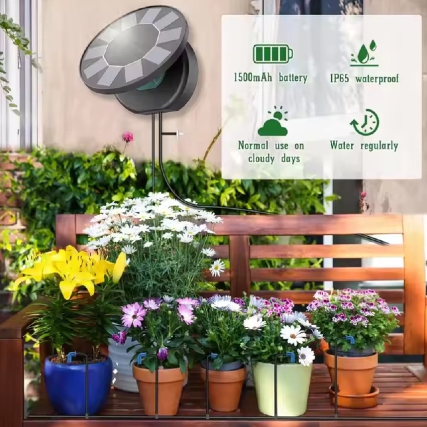
Energy Efficiency – Completely solar-powered, eliminating electricity bills and dependence on fossil fuels.
Water Conservation – Drippers deliver precise amounts of water, minimizing evaporation and runoff.
Labor Savings – Automation reduces the need for manual watering and frees up time for other farm tasks.
Improved Crop Health – Consistent watering promotes better nutrient absorption, uniform growth, and higher yields.
Sustainability – Eco-friendly solution that reduces carbon footprint and encourages renewable energy adoption.
Adaptability – Compatible with multiple crops, soil types, and farm sizes, from small gardens to large orchards.
Cost-Effective Over Time – Although initial investment is higher than traditional systems, reduced water, energy, and labor costs quickly offset the upfront expense.
Farmers and gardeners using solar irrigation systems often report increased efficiency, lower operating costs, and healthier crops, especially in areas with limited electricity access or unreliable water infrastructure.
While solar irrigation systems are highly reliable, some maintenance and monitoring are necessary:
Solar Panel Cleaning – Dust and debris reduce efficiency; clean panels periodically.
Pump Maintenance – Check for wear or blockages to maintain consistent flow.
Filter Cleaning – Prevent clogging by cleaning or replacing filters regularly.
Tubing Inspection – Repair leaks and ensure drippers are functioning properly.
Battery Care (if used) – Monitor charge cycles and replace batteries as needed.
Addressing these small issues ensures long-term performance and prevents downtime during critical irrigation periods.
The cost of a solar irrigation system varies depending on the scale, pump capacity, number of drippers, and whether battery storage is included. Despite a higher initial investment than traditional drip irrigation, the return on investment (ROI) is significant due to:
Zero ongoing electricity costs
Reduced labor expenses
Increased crop yield and quality
Long-term durability of solar panels (often 20+ years)
Over time, these systems can pay for themselves within a few seasons, particularly in sunny regions with high water or energy costs.
The integration of solar energy with auto dripper irrigation systems offers a revolutionary solution for sustainable and efficient farming. By combining renewable power, precise water delivery, and automation, solar irrigation systems allow farmers and gardeners to maintain healthy crops without manual effort or high operational costs.
For those looking to invest in reliable, high-quality solar irrigation solutions, Shenzhen BSV Solar Energy Co., Ltd. provides advanced systems designed to meet diverse agricultural needs. With a focus on durability, efficiency, and eco-friendly design, they offer products that help maximize yields, conserve water, and reduce energy consumption. Interested growers and distributors can explore their offerings to implement smarter, greener irrigation practices.


