
English 
Views: 0 Author: Site Editor Publish Time: 2025-11-07 Origin: Site


In modern agriculture, sustainability and efficiency are no longer optional—they are essential. With rising electricity costs, water scarcity, and increased demand for food production, farmers and home gardeners need innovative solutions that are both economical and eco-friendly. Among the most impactful technologies today is the solar irrigation system, especially when combined with dripper kits designed for precise and minimal water usage.
This article explores how solar irrigation systems work, their advantages, and why investing in a solar-powered dripper kit can lead to big harvests from small investments in both home gardens and agricultural farms.
A solar irrigation system uses solar energy to power water pumps that draw water from natural sources such as rivers, ponds, boreholes, or wells. Instead of relying on electricity or diesel generators, which are costly and environmentally harmful, solar panels convert sunlight into electricity, supplying energy to pumps and irrigation networks.
A typical system consists of:
Solar panels (polycrystalline or monocrystalline)
Solar water pump (DC or AC pump with inverter)
Controller or charge controller
Pipes, storage tanks, and irrigation network
Optional battery storage for nighttime or cloudy conditions
When combined with a dripper irrigation kit, the system delivers water directly to the roots of plants in precise amounts, preventing water loss from evaporation or runoff.
Once installed, the solar irrigation system uses free sunlight. There are no monthly electricity bills or fuel expenses. For small farms and gardens, this is especially beneficial.
With dripper kits, water is delivered drop by drop to each plant’s root zone. This ensures plants receive just the right amount of moisture, increasing crop yields while saving up to 70% of water compared to traditional flood or sprinkler irrigation.
Plants that receive consistent water supply grow faster, produce more fruits and vegetables, and are less affected by drought stress.
A solar-powered dripper irrigation system is an efficient and sustainable solution for watering gardens and farms. To understand its benefits, it’s essential to know the components that make the system work seamlessly. A typical system includes:
Component | Function |
Solar Panels | Convert sunlight into electricity, powering the water pump. Modern panels are highly efficient and can operate even in low-light conditions. |
Water Pump | Moves water from the source (well, pond, river, or storage tank) to the irrigation network. Pumps can be DC or AC, depending on system size and water volume. |
Controller | Manages the electricity flow, preventing overload or reverse current. Advanced controllers also optimize pump operation for maximum efficiency. |
Storage Tank (Optional) | Stores water during peak sunlight hours, allowing irrigation even when the sun is low or at night. Tanks also help maintain constant water pressure. |
Main Pipe & Distribution Pipes | Serve as conduits for water from the pump to various irrigation lines, ensuring uniform distribution across the field or garden. |
Drip Lines / Dripper Tubes | Equipped with small emitters that release water slowly at the root zone, minimizing evaporation and maximizing efficiency. |
Filters | Prevent clogging caused by debris, silt, or algae. Regular maintenance ensures long-term system performance. |
Pressure Regulators & Valves | Maintain consistent water pressure throughout the network, ensuring uniform irrigation regardless of elevation changes or pipe length. |
Additional Components to Consider:
Some modern solar irrigation kits also include smart sensors that detect soil moisture levels, weather conditions, and even flow rates. These sensors can communicate with a mobile app or controller to automate irrigation schedules, saving water and labor while maximizing plant growth.
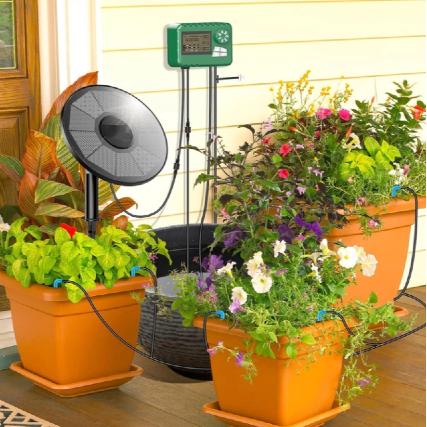
Solar irrigation systems are versatile and suitable for various environments. Here are the most common applications:
For small-scale gardening, such as vegetables, herbs, or ornamental plants, a mini solar dripper kit is often sufficient. A 60–150W solar panel paired with a small DC pump can supply daily irrigation without relying on grid electricity. These systems are easy to install, require minimal maintenance, and make home gardening more sustainable.
Greenhouses often face challenges with electricity supply and heat management. Solar-powered irrigation ensures a stable water supply, which is crucial for plants in controlled environments. By combining dripper kits with timers, gardeners can maintain consistent soil moisture levels, even in hot summer months or during periods of high evaporation.
Rural areas or mountainous regions without access to electricity are ideal for solar irrigation. Since the system is powered entirely by sunlight, it eliminates dependence on unreliable electricity grids or expensive diesel pumps, making it highly suitable for off-grid farming communities.
No Electricity or Fuel Costs: Once installed, the system runs entirely on solar power, eliminating ongoing electricity bills or diesel expenses. This makes it especially cost-effective in remote or rural regions where fuel delivery and energy access are limited.
Minimal Maintenance: Solar panels contain no moving parts, reducing wear and tear. Modern drippers and controllers are built for durability and require only occasional cleaning or filter replacement to maintain optimal performance.
Long Lifespan: High-quality photovoltaic panels can last 20–25 years, providing
Zero Carbon Emissions: By relying entirely on solar energy, these systems produce no harmful emissions, helping reduce the carbon footprint of irrigation activities.
Water Conservation: Precision dripper technology delivers water directly to plant roots, minimizing evaporation and runoff while conserving groundwater.
Encourages Sustainable Practices: Solar irrigation can easily be integrated with rainwater harvesting tanks, greywater reuse, or natural water bodies, further enhancing resource efficiency and supporting eco-friendly agriculture.
Modern solar-powered irrigation systems often feature intelligent automation capabilities:
Soil Moisture Sensors: Detect when the soil is dry and trigger watering only when necessary, preventing overwatering.
Flow Sensors: Track water usage and alert users to leaks or blockages, ensuring system reliability.
Programmable Timers: Allow users to schedule irrigation at optimal times, such as early morning or late evening, maximizing absorption and reducing evaporation losses.
Together, these advantages make solar irrigation a sustainable, cost-saving, and intelligent solution for modern farming and gardening.
Install panels facing south (Northern Hemisphere) or north (Southern Hemisphere) for maximum sunlight exposure.
Ensure panels receive 5–6 hours of direct sunlight daily.
Clean panels regularly to remove dust, dirt, or bird droppings, which can reduce efficiency.
Use pressure-compensating drippers on sloped land to maintain uniform flow.
Space drippers according to plant type: 20–30 cm for vegetables, 40–60 cm for fruit trees.
Avoid sharp bends in tubing to reduce pressure loss and prevent clogging.
Always install a filter before the dripper network to remove sediments and debris.
Check and clean filters periodically, especially during peak irrigation season.
With Battery: Allows irrigation at night or during cloudy days. Batteries also stabilize water flow for large farms.
Without Battery: Pumps operate only during sunlight hours, often filling a raised storage tank for gravity-fed irrigation later. This option is cost-effective and simpler to maintain.
Regular maintenance ensures optimal performance and longevity of the system. Common issues include:
Problem | Possible Cause | Solution |
Low Water Flow | Clogged dripper or filter | Clean or replace filter, flush dripper lines with clean water |
Pump Not Working | No sunlight or faulty wiring | Check solar panel connections, controller, and fuses; ensure sunlight is sufficient |
Uneven Watering | Pressure imbalance in pipes | Install a pressure regulator or adjust dripper spacing/layout |
Air Bubbles in Pipes | Leaks or improper sealing | Inspect pipes, tighten joints, remove air with priming or flushing |
Pro Tip: Keep a small maintenance kit with spare filters, drippers, and sealing tape to handle minor issues quickly.
The future of solar irrigation combines technology, automation, and smart farming. Artificial intelligence (AI) and Internet of Things (IoT)-enabled systems can:
Measure soil moisture, temperature, and sunlight
Automatically start or stop irrigation
Predict rainfall and adjust water usage
Connect to smartphones via mobile apps
By adopting solar irrigation, small-scale farmers and home gardeners become part of a global movement promoting sustainable agriculture.
A solar irrigation system paired with a dripper kit is a perfect example of how small investments can lead to big harvests. It saves money, conserves water, protects the environment, and boosts crop yields—all without relying on traditional electricity or expensive fuel.
Whether you manage a small garden or a large farm, installing a solar-powered drip irrigation system is a smart and future-ready decision.
If you’re interested in exploring reliable solar irrigation solutions, Shenzhen BSV Solar Energy Co., Ltd. offers practical systems for home gardens, greenhouses, and agricultural farms. You may visit their website or contact their team for more detailed guidance and system customization.


