
English 
Views: 0 Author: Site Editor Publish Time: 2025-11-03 Origin: Site


As global agriculture moves toward sustainability and cost efficiency, one innovation is transforming the way water and energy are used in farming: the solar irrigation system. When combined with advanced drip irrigation, this system not only eliminates electricity costs but also ensures that every drop of water reaches the plant roots effectively. For farmers, homesteaders, and greenhouse growers, this combination means bigger harvests, lower bills, and complete energy independence.
While solar energy effectively solves the power challenge, drip irrigation addresses the problem of water waste. In traditional flood or sprinkler irrigation, a significant portion of water is lost due to evaporation, runoff, or deep percolation. Drip irrigation, on the other hand, delivers water directly to the plant roots through a network of small pipes and emitters, ensuring minimal wastage and maximum efficiency.
The synergy between solar irrigation and drip irrigation creates a system that is greater than the sum of its parts. Solar panels provide the energy required to run pumps, while drip irrigation ensures precise water delivery. Together, they achieve:
Solar Irrigation | Drip Irrigation | Result |
Provides energy for the pump | Delivers water directly to plant roots | Maximum efficiency with minimal waste |
Works best in sunny regions | Reduces water usage by up to 60% | Ideal for drought-prone areas |
Cuts electricity cost to zero | Improves crop yield and quality | Higher profit margins and sustainability |
Operates independently of the grid | Prevents soil erosion and nutrient leaching | Better soil health and long-term fertility |
By combining these two technologies, farmers can achieve up to 50% savings in water usage while simultaneously reducing operational costs and increasing productivity.
Drip irrigation is not just about delivering water; it’s about delivering water intelligently. Here’s why it’s especially effective when paired with solar systems:
Root-Zone Targeting: Water is supplied directly to the root zone, where plants absorb it most efficiently. This ensures that no water is wasted on bare soil or weeds, maximizing the benefit of each drop.
Minimal Evaporation: Instead of spraying water into the air or over a large surface, drip irrigation releases water slowly near the soil, significantly reducing evaporation losses, particularly in hot and arid climates.
Disease Prevention: Since water does not splash on leaves or stems, plants are less susceptible to fungal diseases and root rot, promoting healthier growth.
Adaptable to Variable Solar Flow Rates: Even when sunlight intensity fluctuates, solar pumps may vary in output. Drip systems can handle these variations gracefully, providing consistent water flow without harming plants.
Supports Fertigation: Drip irrigation allows the delivery of fertilizers through the water system, combining water and nutrients efficiently. This feature not only saves labor but also enhances crop growth and quality.
In short, drip irrigation ensures every drop of solar-powered water counts, making it a perfect companion for solar irrigation systems.
A solar-powered drip irrigation system may sound complex, but its operation is straightforward. Here’s a detailed breakdown of how it works from sunlight to root watering:
Sunlight Hits the Solar Panels → Electricity Generation: Solar PV panels convert sunlight into direct current (DC) electricity. Modern panels are highly efficient, even under partial sunlight, ensuring steady power output throughout the day.
Pump Activation → Water Extraction: The electricity powers the solar water pump, which draws water from a well, river, pond, or storage tank. Submersible pumps are used for deep wells, while surface pumps are suitable for open water sources.
Filtration → Protecting the System: Before water enters the irrigation network, it passes through filters to remove sand, silt, and other debris. This step is crucial for preventing clogging of the small emitters in drip lines, ensuring long-term system reliability.
Pressure Regulation → Consistent Flow: Solar-powered pumps may produce varying water pressure due to changes in sunlight. Pressure regulators or controllers stabilize water flow, ensuring that every plant receives a consistent supply.
Water Travels Through Drip Pipes → Targeted Delivery: Water moves slowly through the drip network, reaching each plant precisely at its root zone. Flow rate, emitter spacing, and pipe layout are designed according to crop type and soil conditions.
Result → Efficient Growth: The combination of solar power and drip irrigation ensures zero electricity bills, minimal water waste, and maximized crop growth. Farmers can automate watering schedules, reduce labor, and enjoy higher yields without environmental harm.
This step-by-step process illustrates how solar irrigation combined with drip technology creates a smart, self-sufficient system for modern agriculture.
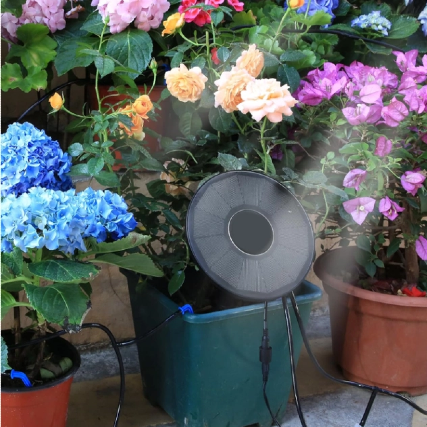
The versatility of solar drip irrigation allows it to be applied across farms of all scales, from small home gardens to extensive commercial fields.
For urban gardeners, rooftop planters, or backyard vegetable beds, solar-powered drip irrigation systems provide an effortless way to maintain healthy plants.
Automated Watering: With pre-set schedules, the system delivers consistent moisture at the right time, allowing users to travel or manage busy routines without worrying about their plants.
No Need for Electricity Outlets: The solar panel powers the pump and controller, making it ideal for areas without grid access or where electricity costs are high.
Space Efficiency: Compact and adaptable, it fits easily into balcony pots, greenhouse trays, and small garden beds.
Eco-Friendly Gardening: By using renewable energy and reducing water waste, solar drip systems promote sustainable living and environmentally conscious gardening.
This makes them perfect for households seeking a low-maintenance, green solution for everyday plant care.
For small to medium agricultural operations such as vegetable farms, fruit orchards, vineyards, and flower farms, solar irrigation systems offer multiple advantages.
Reliable Water Supply During Peak Sunlight Hours: The system generates its highest power when the sun is strongest—precisely when plants need the most water.
Freedom from Grid Dependency: Farmers can irrigate efficiently even in off-grid or remote locations.
Higher Yields and Water Efficiency: Transitioning from traditional flood irrigation to solar drip systems can improve crop yields by up to 50%, thanks to consistent moisture delivery and reduced plant stress.
Reduced Labor Costs: Automated irrigation frees workers from manual watering, allowing more time for cultivation and harvesting.
Although not designed for large-scale industrial agriculture, these systems scale efficiently for small and medium farms, offering cost savings, reliability, and sustainability.
Choosing the right solar drip irrigation system involves considering multiple factors to ensure efficiency and a solid return on investment.
Factor | Why It Matters |
Water Source Depth | Determines the required pump type and power |
Daily Water Demand | Helps calculate the number and capacity of solar panels |
Crop Type | Drip line spacing and emitter flow rates vary by crop |
Sunlight Hours | Affects pump running time and daily irrigation volume |
Budget & Payback Period | Determines feasible system size and ROI expectations |
Pump Type | Suitable For | Features |
DC Submersible Pump | Deep wells | High efficiency, no inverter required |
AC Surface Pump | Rivers or ponds | Requires inverter, suitable for high flow |
Helical Rotary Pump | Low water levels | Operates effectively under low sunlight intensity |
The right combination of pump type, panel capacity, and irrigation layout ensures maximum efficiency and minimal maintenance issues.
Proper installation and regular maintenance are crucial for the longevity and performance of solar drip irrigation systems.
✔ Face solar panels toward true south (Northern Hemisphere) or true north (Southern Hemisphere) for maximum sunlight capture.
✔ Tilt panels at an angle similar to your latitude to optimize seasonal performance.
✔ Use strong mounting brackets to withstand wind, rain, and other environmental stresses.
✔ Place the pump close to the water source to minimize suction loss and improve efficiency.
✔ Always install filters before drip lines to prevent emitter clogging and extend system life.
Item | Frequency | Action |
Solar Panels | Monthly | Clean dust, bird droppings, and leaves to maintain efficiency |
Pump & Motor | Every 6 months | Inspect for unusual noise, check seals, and lubricate moving parts |
Filters | Weekly | Flush and clean to prevent clogging of drip emitters |
Drip Emitters | Monthly | Inspect for blocked or damaged emitters and replace if necessary |
Battery (if included) | Every 12 months | Check charge capacity, wiring, and terminals for corrosion |
Regular upkeep ensures that the system continues to deliver consistent water flow, maximizes solar energy use, and prevents costly repairs.
The combination of a solar irrigation system and drip irrigation technology offers a powerful solution for the future of agriculture. It lowers operational costs, increases water-use efficiency, boosts crop yields, and reduces environmental impact. Whether you manage a small garden or thousands of acres, this technology gives you control, independence, and peace of mind.
If you're considering implementing a reliable solar irrigation system or looking for customized solutions for farms or greenhouses, Shenzhen BSV Solar Energy Co., Ltd. provides professional guidance, high-efficiency solar pumps, drip kits, and one-stop service. You can learn more about their solutions or get expert advice tailored to your needs.


